Showing posts with label Montessori Method. Show all posts

Friday, December 30, 2022

5 Play-Based Ideas to Help Daycare Kids Learn Basic Math Concepts

Ordinary activities during the course of the day cab include simple math concepts for daycare children to pick up on. Adding and subtracting are concepts that solidify early, but even division and multiplication are possible with a little practice.

  1. Apples and Oranges

Fruits are excellent tools for teaching math to Montessori daycare students. Different fruits can be used for sorting and shapes, and you can also use things like grapes to learn about sets, multiplication, and subtraction. Fruit is more than an aid for teaching math, it is also an excellent sensory activity, combining math skills with scents and tastes.

  1. Lego-Style Learning

Pegged building blocks are perfect math accessories. In the guise of play-based building, children are learning to count, sort, and perform multiplication, division, and more. While lego-style blocks are not technically a Montessori activity, they have the ability to be used for a wide range of subjects from arithmetic to vocabulary. As an engaging activity, pegged blocks are fun to use and children will play with them for hours on end.

  1. Painter's Tape Shapes

Painter's tape is available in several colors straight off the shelf and makes a perfect medium for colorful shapes or numbers of many sizes-- even super large. Pointer's tape is similar to masking tape with less powerful adhesives. Painter's tape can be easily peeled off, and will not damage paint, wallpaper, or furniture. It is a fun way for children to build familiarity with numbers, make shapes of different colors, and count the shapes they've made.

  1. Daily Numbers

Use a paperclip on a piece of twine thrown into a plastic pail of magnetic numbers and then look for that number throughout the day. This helps young children discover how prevalent numbers are in our lives, and helps them become more engaged in learning to count or perform simple math. 

  1. Animals and Cars

Favorite toys like wooden farm animals or toy cars are often the first objects that children use to perform basic math functions like addition and subtraction. If you observe children at play with their like-sized toys, it is very common to see them sorting and counting, even if they aren't yet fully aware of what the order of the numbers may be. Counting cars develops relatively naturally and makes a great place to encourage the use of counting and math.


Daycare children are just beginning to learn about counting, so daycare math is typically very simple tasks using familiar objects. However, children learn basic math very quickly, and providing an increasingly challenging goal will help maintain interest over an extended period of time.


Monday, October 31, 2022

Does a Montessori Infant Care Program Benefit My Child's Development?

It is not unusual to enter an average daycare and witness a certain amount of pandemonium, but that is rarely a situation in Montessori schools. Montessori was expressly created in a way that allows children more freedom of movement, interaction with older and younger peers, and a sense of self-value to make them confident students. Unlike traditional schools that are only interested in teaching a limited and rigorously enforced set of information, Montessori schools provide a whole-child developmental process that produces a well-rounded education and the social and emotional skills needed for everyday life.

Motor Skills

Children are encouraged to work on their fine and gross motor skills in Montessori daycare. Each day is spent on various authentic activities that require children to use their fingers for detailed work like lifting, touching, gripping, and more. The muscle tone and physical coordination they build at this age will be immensely valuable when they begin using pencils, crayons, scissors, and other small educational tools.

Academic Skills

Academic studies combine with physical activities to teach children a variety of useful concepts while they play. Montessori schools have been teaching STEM subjects to small children for over a hundred years-- long before such a term even existed. In fact, Maria Montessori considered interacting with nature to be a vital aspect of early development, to the point that it became one of the fundamental aspects of authentic Montessori education.  

Social Skills

Because children aren't restricted to a single location in the classroom, Montessori children are able to work on important social skills throughout the day. As they freely move between activities, children learn to take turns, work in pairs and groups, and develop the critical thinking skills to negotiate outcomes rather than displaying emotional outbursts.

Emotional Development

Emotional development is important in an environment where children are able to make their own choices and take responsibility for their own actions. To guide emotional development, Montessori guides help children become more empathetic, considering the reactions of others, and making decisions based on avoiding infringing on the feelings of others.


Montessori is a different sort of education because it is focused on more than academic instruction. Without external rewards or punishments, the Montessori environment is focused on providing real development in areas that make children stronger, help them communicate better, and leave them more accepting of the differences-- physical, emotional, academic, racial, and cultural-- of the world they live in.


4 Simple Montessori-Inspired Activities For Teaching Children About Thanksgiving

In a private kindergarten, every day is a good day to express gratitude and thankfulness. With Thanksgiving approaching, opportunities to learn about the holiday and the importance of being grateful for what we have will be everywhere you look, and children will enjoy participating in various activities centered around the season.

  1. Inclusion in Holiday Activities

The Thanksgiving season is a busy time for most of us, and Montessori kindergarten children may feel left out at times. It is fine to enjoy the company of relatives and visitors, but make sure your children get to be part of the experience. For many children, the holidays are the only time of year when they see some relatives, and children need to interact with them, learn about them, and get to know the diversity of the family. 

  1. Grace and Courtesy Activities

Social interaction is an important part of childhood development, and this time of year is perfect for practicing social skills. Grace and courtesy activities are central to the Montessori Method, including learning to address elders appropriately, ask politely, and show gratitude when it is deserved. Every day has opportunities for thankfulness, and thanksgiving is an excellent time to look for them.

  1. Fall Crafts

Engaging in fall crafting activities will keep your children entertained for hours. Making things to decorate for the holidays also helps children feel more like a part of the celebration, helps them work on fine motor skills, and helps them develop a broader vocabulary. Remember that your children want to see their work admired, and hang artwork and decorations at a level that makes it available to children as well as adults.

  1. Practical Life Experience

Helping with tasks such as setting the table, helping cut or measure, and serving refreshments teach vital practical skills that will benefit children throughout their lives. It may be a treat to lick the mixing spoon, but it is an honor to be allowed to participate in preparing the recipe. Given the opportunity, kindergartners will be thrilled to measure and pour and mix ingredients along with you.


You do not have to wait for a holiday to practice the tenets of grace and courtesy. Try helping your children keep a daily journal of events and reasons to be grateful, and discuss them regularly. When your child sees that her experiences are important to you, she will be more willing to share them with you, and eager to receive the praise that comes from great behavior.


Monday, September 26, 2022

Why is The Value of Play Essential in an Authentic Montessori Daycare?

Play is vital for early childhood development in daycare. More than simply keeping children occupied, playtime is also an excellent time for teaching children a variety of developmental skills. From fine and gross motor skills to language and writing, Montessori activities keep children engaged and interested in learning and doing.

Hands-On Learning

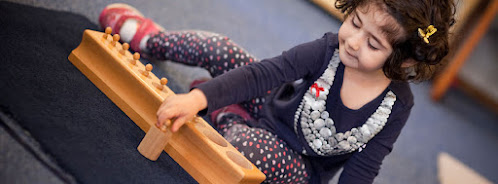
The Montessori daycare is a play-based learning environment. Working with specially designed educational toys makes it easier for children to learn new skills and reach vital developmental goals in physical, social, and intellectual areas. Some activities provide practical experience as well, such as learning to use classroom tools like pencils or crayons. In fact, Montessori daycares are involved in the complete development of small children, and the activities they are engaged with were carefully selected to develop the total range of developmental skills.

Learning Social Interaction

When children play together, they are also developing critical social skills that will help them interact with others. For example, playing with a particular toy is also an opportunity to practice taking turns and sharing resources. By playing together, children learn the basics of diplomacy, the value of teamwork, and the importance of perseverance. The thing to keep in mind is that the game is being presented as an educational tool that inspires, excites, and motivates children.

Natural Order of Development

In the process of developing the Montessori Method, Maria Montessori how children interacted in a natural, unstructured setting. What she saw was that children learn by doing things with their hands as they go about their childhood games. She also observed that children naturally group into mixed age groups and that younger children are able to absorb new information by observing and playing with kids a little older than themselves. These observations became crucial points that were incorporated into the Montessori Method.


Daycare children learn by playing with toys and activities that are fun and engaging. They never consider that the activities they are having a good time with were chosen for their educational value. And the practice of hands-on education doesn't end with daycare or preschool. Children of all ages will be using hands-on education as their primary method of learning for as long as they remain in a Montessori environment.


Friday, April 29, 2022

4 Examples of Using Coloring to Promote Early Childhood Development


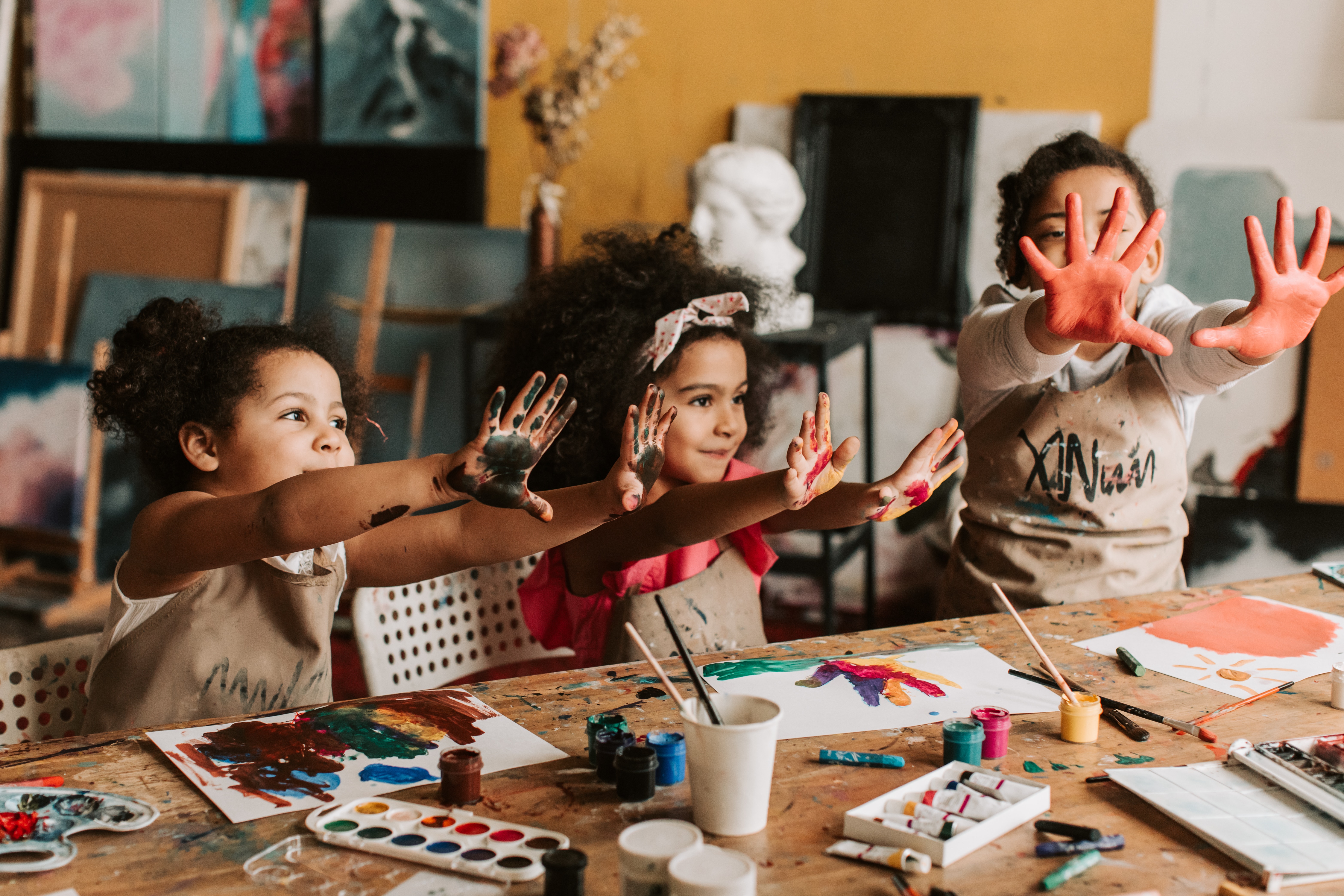
Far from a way to keep Montessori daycare children busy, coloring activities promote a range of developmental traits that will benefit children as they grow. This is where kids learn the foundations of holding a writing implement and making controlled lines, a skill that will morph into writing in a few more years. To illustrate the importance of coloring in a Montessori classroom, consider these 4 areas of development derived from coloring activities.

  1. Fine Motor Skills

Learning to grip a cylindrical object and manipulate the tip of it to make lines or just coloring within lines is a major developmental achievement in daycare. Coloring is one of many ways your Montessori daycare will help develop fine motor skills, often in conjunction with other learning activities. 

  1. Critical Thinking

Coloring helps kids learn to stay within the lines of an image, but it also promotes critical thinking skills and creativity when children are given the freedom to color what and how they please. Coloring is also useful in learning to count, sort, and other activities, or even embedded into science activities.

  1. Self-Expression

Learning to think creatively bolsters self-expression, encourages a healthy sense of personal value, and opens the door for a whole new way that children can communicate with others. This helps children think more independently, and act on their conclusions in a positive manner. The psychology behind coloring is even more in-depth than you might think, making it an excellent tool for child development.

  1. Preparation for Writing

Even before they learn to draw letters, children are ready to learn how to make lines and curves using a marker or crayon. Picking up these skills as early as possible provides the child with the necessary developmental tools she needs to transition from one educational phase to the next.


Coloring is a great way for young children to develop important skills like gripping, moving objects, creative thinking, and much more. Whether they are enjoying a favorite coloring book at home or working in the classroom, children are unknowingly teaching themselves as they play.


Thursday, March 24, 2022

6 Ways Montessori Elementary School Excels Over Traditional Schools

An authentic Montessori elementary school is quite a bit different than traditional public schools. Where traditional schools rely on memorization and a generic lecture-based teaching system, Montessori schools use hands-on tools to reinforce the retention of information and a self-paced teaching system that encourages children to want to learn.

  1. Self-Paced Learning

Montessori school students are not forced to be on the same page at the same time as the rest of the class. Instead, children work independently at their own projects, learning at a pace that fits them rather than trying to keep up-- or losing interest by not being allowed to move forward. Montessori promotes an interest in learning that is central to Montessori theory.

  1. Intrinsic Motivation

Montessori is designed around the observation of children, offering them encouragement and guidance only as they require it. This helps build self-esteem, leading to children who take a more active role in their own goals. Children who feel good about themselves are more likely to help others, another key component of Montessori.

  1. Developmental Age Groups

Montessori uses a 3-year age group, with new children entering the class each year and others "graduating" out of it. The age grouping corresponds to developmental stages observed by Maria Montessori, but they also allow all children to be among both the youngest and the oldest students in the class.

  1. Guided Instruction

Montessori teachers are called guides, and that is their primary function in a Montessori classroom. Children learn to select their own activities and strive for their own developmental goals as the guides observe their progress and offer gentle guidance to help them stay focused and engaged. 

  1. Whole-Child Development

The Montessori Method is a whole-child developmental approach. Children learn by doing things instead of sitting idly at generic desks and learning from identical textbooks. They develop fine motor skills needed for manipulating objects and gross motor skills that improve running, jumping, and climbing abilities. They develop strong social skills that include diplomacy, empathy, and social etiquette. Children who spend their developmental years in a Montessori environment make great leaders, take part in their communities, and have respect for the environment and their fellow human beings.

  1. Discipline and Motivation

Montessori children learn to regulate themselves and develop an internal motivation that gives them the incentive to try new things and tackle new skills without the need for external rewards or punishments. The idea is that children who feel good about themselves and their environment will motivate themselves to learn and apply their learning to real-world applications.


Beginning with an assignment to educate children who were considered by experts of the time to be unteachable, Maria Montessori recognized that hands-on learning provided concrete examples and more closely resembled how children behaved in unstructured environments. The difference is that every aspect of the Montessori classroom is a carefully prepared environment.


Thursday, December 30, 2021

What is the Appropriate Age for Children to Begin a Montessori Education?


Montessori excels at early childhood development, but it has advantages for children of all ages. If you have been considering enrolling your children in Montessori, the best advice is to do a little research so you understand the process, and then get the enrollment underway as soon as possible. Because Montessori is divided into sensitive periods that correspond to natural learning phases, the focus of each group can be discussed in simple terms.

Montessori Daycare

Beginning with infant care, Montessori focuses on appropriate childhood development in 3-year phases. This phase is called the “Absorbent Mind,” referring to the children being exposed to a wealth of new sensations and information as they become more aware of the world around them. Daycare students are engaged in developing fine motor skills, learning to communicate, and discovering social skills that help them interact with peers, adults, and the community at large. 

Montessori Preschool

The second phase of Montessori put more focus on academic development and gross motor skills. Children will be more involved with activities that involve culture, language, music, and other fields. Many authentic Montessori workstations can be used for lessons in multiple academic fields, and children are encouraged to explore a range of play-based lessons.

Montessori Elementary

In Montessori elementary children enter what Maria Montessori called the “Reasoning Mind” phase. Creativity and critical thinking are nurtured, encouraging children to explore causation and effect, community involvement, and academic subjects such as math, science, and history. Montessori materials allow conquering multiple subjects by using workstations for different or concurrent purposes, with longer class periods to accommodate their studies.

No Time Like the Present

From infants through primary education, children benefit from Montessori education. The best results come from early enrollment and incorporating the Montessori Method in home life. Starting early allows children to use the advantages of hands-on learning throughout the process without having to adjust to a different type of instruction as they get older, potentially missing opportunities to maximize the Absorbent and Reasoning phases of development.


Keep in mind that only authentic Montessori schools are going to provide the full learning system developed by Maria Montessori. Ask about accreditation and check out parent testimonials. It won’t take long to determine that Montessori is perfect at every stage of childhood education.


Monday, November 16, 2020

Your Kids Will Love These 3 Exciting Farm Activities

Your Kids Will Love These 3 Exciting Farm Activities - Montessori Daycare - Montessori West

Life on the farm is fascinating for daycare children. They enjoy learning about the different animals, discovering various crops that can be planted, and learning how fields have been tended for ages. These 3 activities revolve around farm life, but they also include other important skills, including counting and sorting, fine motor skills, and measuring.

Monday, July 22, 2019

Manners and Your Toddler


If you have ever taken a tour of a Montessori elementary school, you were probably impressed by the behavior of the children as they quietly went about their different tasks. The secret is that the Montessori method puts more emphasis on communication and social interdependence, teaching children how to communicate in ways that are acceptable both in the classroom and in the community at large.

Sunday, February 17, 2019

Fun with Letters: Teaching your Child the Alphabet


The Montessori School of Flagstaff takes pride in teaching children about letters because reading is the key to learning about everything else. We recommend that you begin teaching your children the alphabet early because that will give them a headstart at almost everything they will learn later. To help you get started, we came up with some great ideas that you can use at home.

Montessori Philosophy: Mixed-Age Classrooms


One of the hallmarks of Montessori schools are classrooms with mixed age groups. In most cases, the age range is a maximum of 3 years, with the exception of the youngest children who are typically kept to a range from birth to 18 months. There are excellent reasons for having mixed age groups in classrooms.


Prepared Environment: Difference Between Montessori and Traditional Education


At Montessori Children’s House, the prepared environment is a critical step in teaching children. One visit to our classrooms is all it takes to see the prepared environment in action and observe how it differs from traditional schools. Some of the key benefits of a prepared environment are listed here, but there is a lot more to it than we can relate briefly.

Sunday, February 10, 2019

Child Centered Learning: Montessori Method


In many approaches to pedagogy, children are object of the learning process. The adult teacher or instructor is thought to be the source of knowledge, and the children are the empty vessels into which that knowledge is poured. The Montessori Method, however, takes a different approach. In the Montessori Method, children are seen as the directors of their learning, and the adult teachers as guides and supports. This shift puts children at the center of their education and allows teachers to meet them where they are. In order to foster child-centered learning, the Montessori Method outlines five principles that guide teachers in their primary, lower, and upper elementary Montessori programs: respect for the child, the absorbent mind, sensitive periods, the prepared environment, and self-education.

Sunday, January 20, 2019

Montessori Philosophy: Creating Life-Long Learners


Montessori philosophy is a special way to educate children by immersing them in activities and experiences which teach fine motor control, self-expression, and encourages children to explore topics they are interested in. As Montessori educators, our goal is to prepare children for a lifetime of learning rather than a few hours of instruction.


Outdoor Winter Fun for Kids of All Ages


Don't let Winter keep your children locked inside. There are plenty of games and hands-on activities for the ice and snow, and those who are lucky enough to live where it doesn’t snow can play regular summer games...albeit in winter attire.


Halfway Through the School Year: Checking in with your Child's Teacher


Typically, parent-teacher conferences are held on a regular basis but you have the option of having more frequent meetings if you or the teacher deem them necessary. Midway through the school year is a perfect time to schedule a meeting with your child’s teacher to get an idea of how well your child is developing through the Montessori Method. When you meet with the teacher, be sure to inquire about observations regarding things like the following.


Tuesday, December 18, 2018

Elementary Art Class: Holiday Crafts


Art plays a vital role in your Montessori elementary child’s development. Children use art to express feelings, explore creative mediums, and expand their imagination. During the holidays, supplying the themed materials encourages creativity and learning.

Sunday, December 16, 2018

Montessori Reading Tips for your Preschooler


The world has moved into a digital age where words on a screen are inescapable. In order to give your preschooler the best advantage later, helping them learn to read at an early age is important. The student guides at school will do their best to help out, but reading often begins at home.


Giving Back this Holiday Season


The holiday season is full of opportunities to express how one feels about another, show respect and care for others. The Montessori curriculum uses this season to increase your child's awareness of those in their lives they are grateful for and those in their environment who have needs that are not being met. Even though every season of the year deserves attention for those in need of services or items, there are unique opportunities for your child to give back during the holiday season.


Wednesday, November 7, 2018

Giving Back: Ways to Volunteer in Any Community


The strength of a community depends on the interactions within it. Whether you are volunteering your skills in your child's Montessori classroom, assisting those less fortunate, or simply making your community a better place for everyone, your contributions have profound effects on the local quality of life. Opportunities to volunteer can be found in many places. To give you some ideas on where to start or little ways to play an active role, we have provided some suggestions where volunteers are in high demand.