Showing posts with label Montessori preschool children. Show all posts

Monday, November 27, 2023

How to Transform the Magic of the Holidays into a Learning Experience

The holiday season offers a unique opportunity to infuse the magic of festivities into meaningful learning experiences for children. By blending the joy of the holidays with educational activities, parents and teachers can create a rich environment that sparks curiosity and enhances skills. Take a look a these creative ways to transform the holidays into a learning experience for Montessori preschool children.

Advent Calendar Learning


Turn the tradition of an advent calendar into a daily learning adventure. Tailor each day to a specific learning theme, incorporating activities that align with subjects like math, science, language arts, and art. Whether it's a math problem, a science experiment, or a festive art project, the advent calendar becomes a source of excitement and learning throughout the holiday season. The advent calendar keeps Montessori preschoolers engaged in learning activities daily, fostering a consistent and enjoyable learning routine. Provide a well-rounded educational experience by integrating a range of subjects.

Holiday Reading Adventures


Transform the enchantment of holiday stories into a literary wonderland of learning. Select a range of holiday books suitable for the children's age and interests. After each reading session, engage children in discussions about the story and follow up with activities like drawing, writing, or even dramatization. Reading and discussing holiday stories contribute to language and literacy development, along with benefitting critical thinking skills.

Holiday Baking Lessons


Baking festive treats provide an opportunity for hands-on learning, incorporating math skills, following instructions, and understanding the science behind baking. Choose simple and age-appropriate holiday recipes for baking. Baking fosters practical application of math concepts and science principles. Learning to follow a recipe and bake independently instills valuable life skills.

Cultural Exploration


Use the holidays as a gateway to explore diverse cultures and traditions from around the world. Each day, focus on a different country's holiday traditions, customs, and celebrations. Engage children in activities like crafts, cooking, and storytelling that reflect the rich tapestry of global holiday festivities. Incorporate hands-on activities that represent each country, such as creating crafts, trying traditional foods, or learning a few phrases in the language. Exploring global celebrations enhances cultural awareness and appreciation along with learning about the geography of different countries.


By weaving educational experiences into the magic of the holidays, parents and educators can create a season of enriching discoveries for children. Embracing the magic of the holidays as a catalyst for educational exploration ensures that children not only celebrate the season but also cultivate a love for learning that extends beyond the festivities.


Wednesday, May 31, 2023

How is Cultural Diversity Taught in the Montessori Preschool Classroom?

Cultural diversity is a crucial aspect of the Montessori philosophy, which emphasizes respect for all individuals and appreciation of different cultures. In the preschool classroom, educators strive to create an inclusive environment that celebrates diversity and fosters cultural understanding among young children. This article explores the strategies and activities used to promote a sense of cultural awareness and acceptance in the Montessori preschool classroom, highlighting.

Multicultural Materials and Resources

One way cultural diversity is taught in the Montessori preschool classroom is through the use of multicultural materials and resources. Teachers incorporate books, puzzles, maps, and artifacts from various cultures into the learning environment. These materials expose children to different languages, traditions, and customs. By engaging with multicultural resources, preschoolers develop a curiosity and appreciation for cultural diversity. 

Cultural Celebrations and Festivals

Cultural celebrations and festivals play a significant role in teaching cultural diversity in the Montessori preschool classroom. Teachers introduce and celebrate various cultural holidays and festivals, such as Diwali, Chinese New Year, or Thanksgiving. Through storytelling, art projects, music, and dance, children explore the customs and traditions associated with these celebrations. 

Cultural Awareness through Food and Cuisine

Food and cuisine provide a unique avenue for teaching cultural diversity in the Montessori preschool classroom. Teachers organize cooking activities where children prepare and taste traditional dishes from different cultures. They discuss the ingredients, cooking methods, and cultural significance of each dish. This hands-on experience allows children to engage with diverse culinary traditions, broadening their understanding of different cultures. Through food exploration, preschoolers develop an appreciation for the cultural heritage associated with various cuisines,  creating curiosity about different ways of nourishment and culinary practices.

Global Awareness and Communication

Montessori preschool classrooms foster global awareness and communication to teach cultural diversity. Teachers incorporate global themes into discussions and activities, highlighting world maps, flags, and cultural landmarks. They encourage children to share their family traditions and cultural backgrounds, creating a safe space for open dialogue. Teachers may also organize pen-pal exchanges or virtual interactions with children from different parts of the world, promoting intercultural communication and understanding. 


In the Montessori preschool classroom, cultural diversity is taught through the use of multicultural materials, cultural celebrations, food exploration, and global awareness. By engaging with various cultural practices and traditions, children develop an appreciation for diversity, empathy for others, and a sense of global citizenship. Montessori education lays the foundation for a future generation that values and celebrates cultural differences, promoting a harmonious and inclusive society.


Sunday, April 30, 2023

3 Crafting Ideas to Engage Children During the Summer

Summer is a great time for preschool children to explore their creativity and engage in fun crafting activities. Here are three crafting ideas to keep your children entertained during the summer months.

  1. DIY Wind Chimes

Making DIY wind chimes is a great summer crafting activity that is both fun and functional. All you need are some recycled materials like tin cans, old keys, or seashells, string or wire, and some paint or markers to decorate the items. Once the items are decorated, you can tie them onto a piece of string or wire and hang them up outside. Montessori preschool children will love hearing the beautiful sounds their wind chimes make on a breezy day.

  1. Sand Art

Sand art is a classic summer crafting activity that can keep children entertained for hours. All you need are some bottles or jars, colored sand, and a funnel. Children can layer the sand colors inside the bottle to create unique designs and patterns. This activity is great for children of all ages and can be done both indoors and outdoors.

  1. Nature Collages

Creating nature collages is a fun way for children to explore their natural surroundings and use their creativity. All you need are some cardboard, glue, and a variety of natural materials like leaves, flowers, and twigs. Children can use their imagination to create beautiful collages that capture the beauty of nature.


Benefits of Crafting for Children

Crafting activities can provide many benefits for children, including:


  • Developing Fine Motor Skills

Crafting activities help children develop their fine motor skills, which are essential for tasks like writing, drawing, and using scissors.

  • Encouraging Creativity

Crafting activities encourage children to use their imagination and creativity to create something unique and beautiful.

  • Building Confidence

Crafting activities can help build children's confidence by allowing them to express themselves and build self-esteem.

  • Promoting Relaxation

Crafting activities can be a great way to promote relaxation and mindfulness, allowing children to destress.

  • Fostering Family Bonding

Crafting activities can be a fun way for families to bond and spend time together, creating experiential memories.


Summer is the perfect time for Montessori children to engage in fun crafting activities. DIY wind chimes, sand art, and nature collages are just a few ideas to keep your children entertained and engaged during the summer months. Crafting activities can provide many benefits for children, including developing fine motor skills, encouraging creativity, building confidence, promoting relaxation, and fostering family bonding. So, gather your crafting materials and get ready for a summer full of fun and creativity!


Tuesday, November 29, 2022

How to Encourage Your Preschool Child Read More at Home

Reading is one of the most valuable skills your preschool daughter will have. Her teachers are helping her read at school, but it is also important for you to encourage reading at home as well. Kids spend more time at home than at school, and opportunities to read can be found almost anywhere you look. Here are some great ideas you can use to assist your daughter in developing a love for words and reading.

Be A Good Example

One very effective way to get Montessori preschool children to read is to let them see-- and hear-- you reading. Make it a habit to read books and magazines, read recipes aloud as you prepare them, and use every opportunity to demonstrate to your daughter that words are important. 

Read  Along

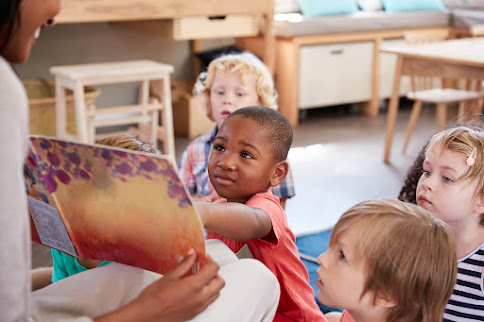
Read with your children, taking the time to examine each page, and talking about the action depicted. This helps children develop critical thinking, builds a strong vocabulary, and helps small kids learn more about themselves and the world. Reading aloud to children is beneficial for kids with verbal challenges as well, because it allows the child to see up close how the mouth moves when words are pronounced.

Provide A Variety

Reading preferences are different from one child to another and children will learn at different paces. Fill the lower bookcase shelves with a variety of age-appropriate books and give your daughter the freedom to choose which ones she likes best. Don't hesitate to go a couple of years older with the material, but concentrate on books with short words, rhymes, and exciting subjects. In addition to children's books, try including a couple of pictorial tomes on nature, animals, and the like.

Word-A-Day

Make a game out of learning a new word every day. You can do this by setting up an erasable whiteboard and using appropriate markers. Choosing the word can be done any way you wish, or simply open a dictionary with your eyes closed and place your finger on the page. With your daughter, practice saying the word, then write it in her journal and talk about what it means and how it should be used in conversation. This provides an important link between printed words and spoken language.


Printed writing has been the way people have kept records for thousands of years, and was done using pictures instead of words even before that. The art of writing is even more important today, and the success of every school student relies on developing strong reading skills and comprehension. 


Monday, June 27, 2022

3 Developmental Music and Movement Activities I Can Do With My Preschool Child

Preschool children have a lot to gain from activities that involve music and movement. Songs and music teach language, and songs that provide movement incentives help develop skills needed for other activities. Putting their right foot in and pulling their right foot out bolsters coordination, teaches children the difference between right and left, builds vocabulary, and encourages the development of fine and gross motor skills.

  1. Be a Role Model

When your Montessori preschool children see you singing along to the radio or dancing about the room, they want to imitate what you do. To that end, the single biggest thing you can contribute in early child development is to be a great role model, showing your children the kind of activities you want them to mimic. Sing to your child, hold his hands and dance with him, and encourage him when he begins to be-bop around the room himself.

  1. Sing-Alongs

Singing along to children's songs helps preschool children develop a stronger vocabulary, helps them learn valuable lessons about themselves and the world, and more. Set aside a little time each day to sing along to some songs, take note of the ones your child enjoys the most, and encourage him to sing along when a favorite tune comes on the radio. Because whether you are singing Itsy-Bitsy Spider or a top-10 pop song you are helping your child learn to speak more fluently and providing other important developmental skills in language, fine motor skills, and more.

  1. Dance With Me

Clapping their hands, stomping their feet, and swaying to and fro in time to music helps children develop vital fine and gross motor skills. Fine motor skills are necessary for gripping and manipulating small objects, and gross motor skills are used for running, jumping, climbing, and more. Dancing with your child is a valuable activity that goes far beyond the actual music and movements taking place.


If you're happy and you know it, clap your hands, and encourage your preschooler to sing along, move along, and participate. Praise his style and ability, because your praise builds his self-esteem, and children who feel good about their abilities are more willing to use them. For small children, everything they do is an educational activity and the more ways you are able to encourage his participation, the faster and easier early childhood development will be.


Monday, January 31, 2022

3 Engaging Ways to Teach About Gratitude in Montessori Preschool

Your child’s Montessori preschool includes good behavior concepts like gratitude in a variety of ways throughout the school day. Whether they are taking turns using a particular activity, participating in group activities, or performing daily routines, gratitude plays a key role in the Montessori environment.

  1. Sharing is Caring

Obviously, there are a limited number of activities available in the Montessori preschool classroom. And that creates plenty of opportunities for children to practice social graces and show gratitude when it is due. Simply learning to say thank you after being given permission to do something is a major step toward learning to show gratitude toward the kindness of others. Just as it is customary to say "thank you" after someone passes the peas at the dinner table, showing gratitude for permissions and external assistance keeps the classroom more focused and avoids conflicts.

  1. Group Activities

When the class has all sorts of group activities, even sing-alongs, it is a great opportunity for practicing social skills like gratitude. Asking for and receiving permission helps keep everything moving along smoothly, avoiding potential conflicts as it instills the concepts of asking and giving into impressionable young minds. And that point is worth remembering because children come into the world as a blank slate that is absorbent and willing so long as that need is fulfilled and encouraged.

  1. Respect and Inclusion

The ability to show gratitude when it is due is vital in developing respect for ones and others. It is an important leadership skill that plays a role in helping children become included more often in more ways. Respect is all about showing gratitude and deferential behavior, and it is important that children develop the skills necessary to both show appreciation and to accept it.


Anywhere your children go, they will have plenty of opportunities to practice displays of honest gratitude. From thanking the clerk for his service to showing gratitude for someone holding the door, life is filled with people interacting, and every interaction involves respectful behavior and appropriate shows of gratitude.


Tuesday, September 22, 2020

Cultural Diversity is Important to the Preschool Environment

Cultural Diversity is Important to the Preschool Environment - Montessori Preschool Chatsworth - Little Wonders Montessori One


Cultural diversity is an important part of the curriculum at Montessori Preschool Chatsworth. Children are not born with biases or prejudice. By encouraging children to think in terms of accepting the differences of others, they also learn to be courteous and fair. But cultural diversity is not a specific topic to be taught, it is simply a matter of course in an amazingly diverse world.