Showing posts with label Montessori. Show all posts

Tuesday, June 27, 2023

Helping Your Child Read at Home Boosts Retention Over the Summer

Summer break is an exciting time for private kindergarten children, but it can also lead to a decline in academic skills known as the "summer slide." One effective way to combat this slide and boost retention is by encouraging your child to read at home. 

Foster a Reading Routine

Establish a daily reading routine that becomes a regular part of your child's summer schedule. Set aside dedicated time for reading, whether it's in the morning, afternoon, or evening. Encourage your Montessori kindergarten child to choose books that align with their interests and reading level. 

Create a Reading Challenge

Make reading a fun and engaging activity by setting up a reading challenge for your child. Create a reading list together, including a variety of genres and authors. Challenge your child to read a certain number of books or accumulate a specific number of reading minutes over the summer. Offer incentives or rewards for achieving their reading goals, such as a special outing or a small treat.

Explore Different Reading Materials

Encourage your child to explore various reading materials beyond traditional books. Visit the library together and encourage them to select magazines, graphic novels, or informational texts that align with their interests. Providing a range of reading materials keeps their reading experience diverse and captivating, helping them maintain engagement and develop broader reading skills.

Engage in Discussion

After your child finishes reading a book or a chapter, engage in meaningful discussions about the story, characters, and themes. Encourage them to share their thoughts, opinions, and predictions. These discussions not only enhance their comprehension skills but also foster critical thinking and analytical abilities. 

Lead by Example

Children often imitate the behaviors they observe in their parents or caregivers. Demonstrate your own love for reading by reading in front of your child. Let them see you enjoy books and discuss what you're reading. When children witness the importance and pleasure of reading from the adults around them, they are more likely to develop a positive attitude towards reading themselves.


Encouraging your child to read at home during the summer is an effective way to boost retention and prevent the summer slide. By fostering a reading routine, creating a reading challenge, exploring different reading materials, engaging in discussions, and leading by example, you provide the support and motivation for your child to maintain their reading skills and develop a lifelong love for learning. 


Wednesday, May 31, 2023

How is Cultural Diversity Taught in the Montessori Preschool Classroom?

Cultural diversity is a crucial aspect of the Montessori philosophy, which emphasizes respect for all individuals and appreciation of different cultures. In the preschool classroom, educators strive to create an inclusive environment that celebrates diversity and fosters cultural understanding among young children. This article explores the strategies and activities used to promote a sense of cultural awareness and acceptance in the Montessori preschool classroom, highlighting.

Multicultural Materials and Resources

One way cultural diversity is taught in the Montessori preschool classroom is through the use of multicultural materials and resources. Teachers incorporate books, puzzles, maps, and artifacts from various cultures into the learning environment. These materials expose children to different languages, traditions, and customs. By engaging with multicultural resources, preschoolers develop a curiosity and appreciation for cultural diversity. 

Cultural Celebrations and Festivals

Cultural celebrations and festivals play a significant role in teaching cultural diversity in the Montessori preschool classroom. Teachers introduce and celebrate various cultural holidays and festivals, such as Diwali, Chinese New Year, or Thanksgiving. Through storytelling, art projects, music, and dance, children explore the customs and traditions associated with these celebrations. 

Cultural Awareness through Food and Cuisine

Food and cuisine provide a unique avenue for teaching cultural diversity in the Montessori preschool classroom. Teachers organize cooking activities where children prepare and taste traditional dishes from different cultures. They discuss the ingredients, cooking methods, and cultural significance of each dish. This hands-on experience allows children to engage with diverse culinary traditions, broadening their understanding of different cultures. Through food exploration, preschoolers develop an appreciation for the cultural heritage associated with various cuisines,  creating curiosity about different ways of nourishment and culinary practices.

Global Awareness and Communication

Montessori preschool classrooms foster global awareness and communication to teach cultural diversity. Teachers incorporate global themes into discussions and activities, highlighting world maps, flags, and cultural landmarks. They encourage children to share their family traditions and cultural backgrounds, creating a safe space for open dialogue. Teachers may also organize pen-pal exchanges or virtual interactions with children from different parts of the world, promoting intercultural communication and understanding. 


In the Montessori preschool classroom, cultural diversity is taught through the use of multicultural materials, cultural celebrations, food exploration, and global awareness. By engaging with various cultural practices and traditions, children develop an appreciation for diversity, empathy for others, and a sense of global citizenship. Montessori education lays the foundation for a future generation that values and celebrates cultural differences, promoting a harmonious and inclusive society.


Monday, February 27, 2023

4 Developmental Math Concepts that Montessori Children Learn in Preschool

Math is part of almost everything we do, even though a lot of it takes place without conscious effort. For preschool children, these skills have only begun to develop, and they will be learning the fundamental concepts of math as early as preschool. Hands-on activities are excellent for promoting math skills because children can manipulate the objects that they are learning from.

  1. Sorting

An important activity for Montessori preschool children is learning to sort objects. Whether the criteria are size, shape, color, texture, or some other factor, dividing objects into groups helps small children develop critical thinking skills, hone fine motor skills, and offer an entertaining framework for learning small kids thrive on.

  1. Counting

Learning to count is the next step in math skills. Counting puts a value on sets and shows how numbers can be manipulated. This skill gets practiced in the course of other activities, including practical skills such as measuring and pouring. In a natural environment, children will begin practicing before they learn the names of numbers, and can often be seen arranging favorite objects in numerical sets, and noticing when a member of the set is absent.

  1. Patterns

Putting together puzzles involves abstract math use such as counting lobes on a puzzle piece, learning how shapes can be interlocked to form another shape, and more. Critical thinking is a vital skill that can be reinforced with puzzles and has applications in everything from arithmetic to social interaction. Sorting, counting, and patterns are all members of the same subset of math, and incorporating them into preschool activities will benefit the child as her education progresses.

  1. Basic Operands

The concepts of addition and subtraction begin developing long before a child knows how to express the words or processes they are using to do the job. For this reason, the basic progression into elementary math generally goes smoothly, but instills the vocabulary and logic of basic operands with example and practice.


Science, Technology, Engineering, Arts, and Math-- the STEAM subjects-- are essential subjects for tomorrow's leaders, and each of them depends on mathematics in some way, making it especially important that today's young children begin learning about math concepts as soon as they become communicative.


Wednesday, August 31, 2022

Why is Montessori Preschool Important for Early Development?

Preschool is the most important period for children to gain the many personal tools needed for later education and eventually interacting in the community. This includes fine and gross motor skills, social etiquette, academic lessons, and learning to perform practical tasks such as measuring, pouring, and cutting.

Mixed Age Groups

The 3-year age group used in a Montessori preschool conforms to a natural order observed by Maria Montessori when watching a group of children. It allows children to spend more or less time learning specific lessons without "falling behind," and it helps children develop interactive skills and self-esteem by cycling through being the oldest-- thus more experienced-- children in the room.

Hands-On Activities

Authentic Montessori activities are designed to be apparently useful, self-correcting, and appealing. This is true of classroom activities such as the Pink Tower as well as nature and natural activities. Each activity is meant to be interesting so that children will take notice, engaging so that children want to use it repeatedly, and self-correcting so the child will know if the task was performed correctly without requiring affirmation from someone else.

Interactive Skills

Montessori children often work together to accomplish tasks, and the Montessori Method makes developing language and social skills one of the highest priorities for early education. Social etiquette is practiced constantly and consistently so that children absorb the rules of social behavior as they grow and without singling out courtesy and grace as a task rather than the natural means of interaction.

Nature in Education

Nature and our relationship with it is a primary tool of Montessori education. From playground games to learning about plants and frogs, children are encouraged to become immersed in learning about the world they live in. Getting outdoors was considered a vital part of early development, and Maria Montessori incorporated nature-based activities into the Montessori Method.

Learning Leadership

Montessori encourages and promotes self-esteem, critical thinking, and social interaction. As a result, children who attend Montessori schools develop the basic skills necessary for leadership activities concurrently with other education goals. And because of Montessori's mixed-age classes, all of the children spend a portion of their education among the oldest children in the class, instilling leadership skills as a natural progression of events.


Montessori promotes a more holistic style of teaching that instructs children on multiple levels and addresses all of the developmental milestones of early education. Children learn to read and write as they gain the skills needed to add and subtract, along with the critical thinking and social responsibility vital to peaceful interactions with other children and adults. 


Friday, July 29, 2022

5 Examples of Differences Between Montessori and Traditional Public Schools

Preschool children tend to perform well in a Montessori environment. As an alternative to traditional schools, Montessori stands apart from other educational strategies because the Montessori Method is designed around children, focusing on helping each child develop in a natural manner using special activities and a completely different teaching style.

  1. Children First

Traditionally, all of the children in a class are expected to always be on the same page, working on the same projects, and using the same materials. By contrast, Montessori preschool students work individually. This is only one example of how Montessori puts individual development first, but the classroom itself is another example, with everything designed to be more comfortable and appealing to the children in the room.

  1. Observation and Guidance

Montessori teachers are called guides because guidance, not instruction, is their primary function. Student guides do not spend the day lecturing to the class as a group. Their approach is to observe the progress of individuals and gently guide them toward new activities or goals that help each child at a personal level.

  1. Hands-On Activity

Independent research has demonstrated the effectiveness of learning through doing, but Montessori students have always used a play-based educational system. Maria Montessori recognized that children are learning when they are at play and designed activities around the idea that children will learn more readily when the task at hand is also enjoyable and engaging.

  1. Mixed Age Groups

Children in the Montessori preschool are learning different skills at different speeds. In a traditional classroom where all of the kids are within months of the same age, this method would be problematic but in a class with a 3-year age spread every child has ample opportunity to learn at a pace that suits them instead of struggling to stay in step with other students.

  1. Practical Experience

There isn't much room for learning to perform practical tasks in a traditional public school environment. Montessori teaches children to perform these tasks as a fundamental part of the educational process, including routine chores and lessons about culture, language, and math, and as a tool for developing important social skills. The end result is a child who not only learns academically, physically, and socially but gains practical experience in real-world tasks as they do so.


Montessori is vastly different from traditional educational approaches. It allows more freedom of choice but demands more focus on learning. It is self-guided and self-correcting, and Montessori is more fully involved in helping the child develop along several developmental paths in unison.


Friday, April 29, 2022

4 Examples of Using Coloring to Promote Early Childhood Development


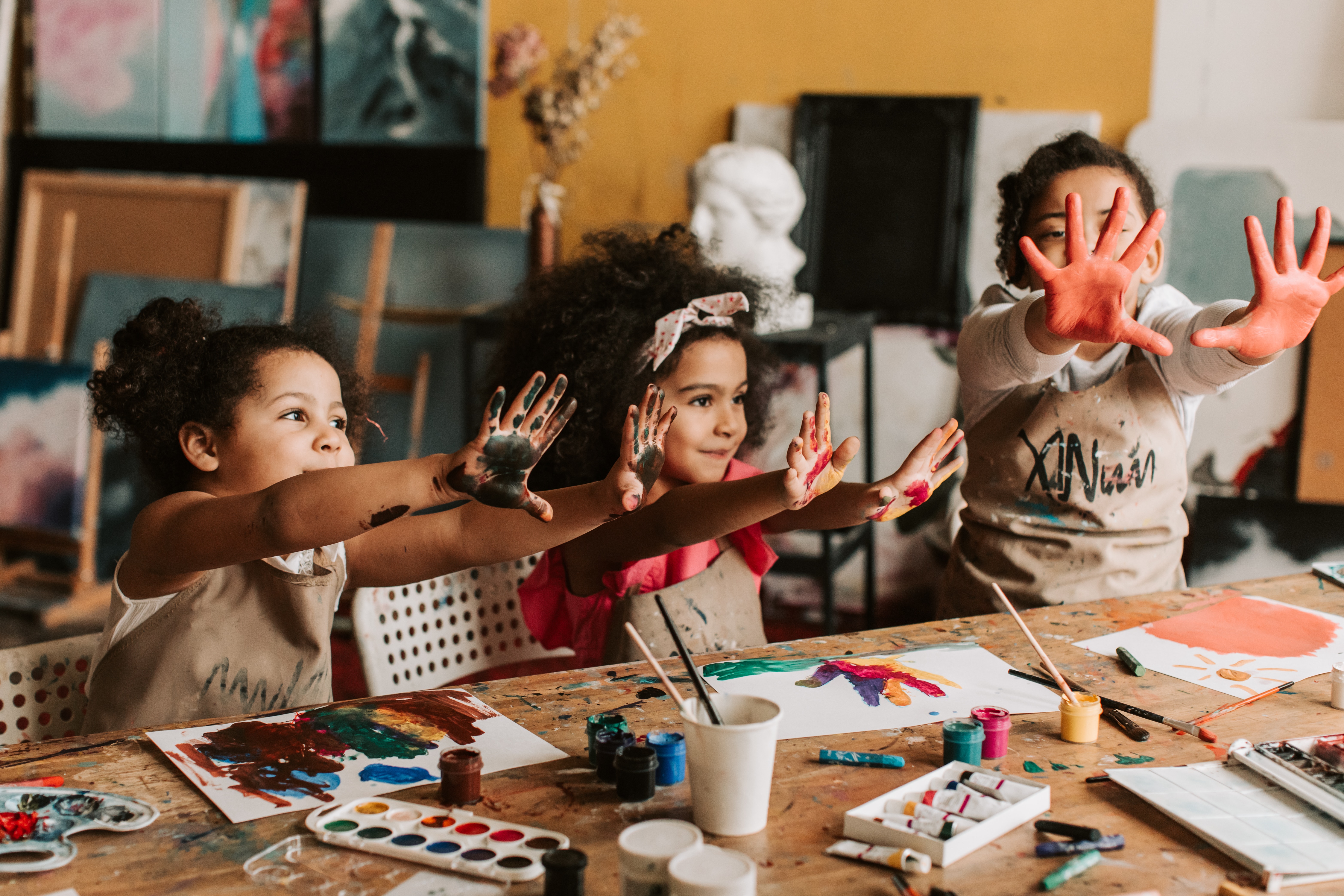
Far from a way to keep Montessori daycare children busy, coloring activities promote a range of developmental traits that will benefit children as they grow. This is where kids learn the foundations of holding a writing implement and making controlled lines, a skill that will morph into writing in a few more years. To illustrate the importance of coloring in a Montessori classroom, consider these 4 areas of development derived from coloring activities.

  1. Fine Motor Skills

Learning to grip a cylindrical object and manipulate the tip of it to make lines or just coloring within lines is a major developmental achievement in daycare. Coloring is one of many ways your Montessori daycare will help develop fine motor skills, often in conjunction with other learning activities. 

  1. Critical Thinking

Coloring helps kids learn to stay within the lines of an image, but it also promotes critical thinking skills and creativity when children are given the freedom to color what and how they please. Coloring is also useful in learning to count, sort, and other activities, or even embedded into science activities.

  1. Self-Expression

Learning to think creatively bolsters self-expression, encourages a healthy sense of personal value, and opens the door for a whole new way that children can communicate with others. This helps children think more independently, and act on their conclusions in a positive manner. The psychology behind coloring is even more in-depth than you might think, making it an excellent tool for child development.

  1. Preparation for Writing

Even before they learn to draw letters, children are ready to learn how to make lines and curves using a marker or crayon. Picking up these skills as early as possible provides the child with the necessary developmental tools she needs to transition from one educational phase to the next.


Coloring is a great way for young children to develop important skills like gripping, moving objects, creative thinking, and much more. Whether they are enjoying a favorite coloring book at home or working in the classroom, children are unknowingly teaching themselves as they play.


Thursday, March 24, 2022

6 Ways Montessori Elementary School Excels Over Traditional Schools

An authentic Montessori elementary school is quite a bit different than traditional public schools. Where traditional schools rely on memorization and a generic lecture-based teaching system, Montessori schools use hands-on tools to reinforce the retention of information and a self-paced teaching system that encourages children to want to learn.

  1. Self-Paced Learning

Montessori school students are not forced to be on the same page at the same time as the rest of the class. Instead, children work independently at their own projects, learning at a pace that fits them rather than trying to keep up-- or losing interest by not being allowed to move forward. Montessori promotes an interest in learning that is central to Montessori theory.

  1. Intrinsic Motivation

Montessori is designed around the observation of children, offering them encouragement and guidance only as they require it. This helps build self-esteem, leading to children who take a more active role in their own goals. Children who feel good about themselves are more likely to help others, another key component of Montessori.

  1. Developmental Age Groups

Montessori uses a 3-year age group, with new children entering the class each year and others "graduating" out of it. The age grouping corresponds to developmental stages observed by Maria Montessori, but they also allow all children to be among both the youngest and the oldest students in the class.

  1. Guided Instruction

Montessori teachers are called guides, and that is their primary function in a Montessori classroom. Children learn to select their own activities and strive for their own developmental goals as the guides observe their progress and offer gentle guidance to help them stay focused and engaged. 

  1. Whole-Child Development

The Montessori Method is a whole-child developmental approach. Children learn by doing things instead of sitting idly at generic desks and learning from identical textbooks. They develop fine motor skills needed for manipulating objects and gross motor skills that improve running, jumping, and climbing abilities. They develop strong social skills that include diplomacy, empathy, and social etiquette. Children who spend their developmental years in a Montessori environment make great leaders, take part in their communities, and have respect for the environment and their fellow human beings.

  1. Discipline and Motivation

Montessori children learn to regulate themselves and develop an internal motivation that gives them the incentive to try new things and tackle new skills without the need for external rewards or punishments. The idea is that children who feel good about themselves and their environment will motivate themselves to learn and apply their learning to real-world applications.


Beginning with an assignment to educate children who were considered by experts of the time to be unteachable, Maria Montessori recognized that hands-on learning provided concrete examples and more closely resembled how children behaved in unstructured environments. The difference is that every aspect of the Montessori classroom is a carefully prepared environment.


Thursday, December 30, 2021

What is the Appropriate Age for Children to Begin a Montessori Education?


Montessori excels at early childhood development, but it has advantages for children of all ages. If you have been considering enrolling your children in Montessori, the best advice is to do a little research so you understand the process, and then get the enrollment underway as soon as possible. Because Montessori is divided into sensitive periods that correspond to natural learning phases, the focus of each group can be discussed in simple terms.

Montessori Daycare

Beginning with infant care, Montessori focuses on appropriate childhood development in 3-year phases. This phase is called the “Absorbent Mind,” referring to the children being exposed to a wealth of new sensations and information as they become more aware of the world around them. Daycare students are engaged in developing fine motor skills, learning to communicate, and discovering social skills that help them interact with peers, adults, and the community at large. 

Montessori Preschool

The second phase of Montessori put more focus on academic development and gross motor skills. Children will be more involved with activities that involve culture, language, music, and other fields. Many authentic Montessori workstations can be used for lessons in multiple academic fields, and children are encouraged to explore a range of play-based lessons.

Montessori Elementary

In Montessori elementary children enter what Maria Montessori called the “Reasoning Mind” phase. Creativity and critical thinking are nurtured, encouraging children to explore causation and effect, community involvement, and academic subjects such as math, science, and history. Montessori materials allow conquering multiple subjects by using workstations for different or concurrent purposes, with longer class periods to accommodate their studies.

No Time Like the Present

From infants through primary education, children benefit from Montessori education. The best results come from early enrollment and incorporating the Montessori Method in home life. Starting early allows children to use the advantages of hands-on learning throughout the process without having to adjust to a different type of instruction as they get older, potentially missing opportunities to maximize the Absorbent and Reasoning phases of development.


Keep in mind that only authentic Montessori schools are going to provide the full learning system developed by Maria Montessori. Ask about accreditation and check out parent testimonials. It won’t take long to determine that Montessori is perfect at every stage of childhood education.


4 Indicators To Help Determine Whether Montessori Preschool is Right For Your Child

Choosing the right preschool for your child is an important decision and has the potential to completely change her progress as she gets older. To help you determine whether Montessori is a good fit for your child, these 4 important facets of the Montessori Method are commonly regarded as some of the best things Montessori brings to the table.

  1. Play-Based Learning

An authentic Montessori preschool uses hands-on, play-based learning as the primary method of instruction. This mimics the natural learning process that people have used for thousands of years, allowing children to explore their studies through interactive, self-correcting materials that were carefully designed and chosen to provide multiple facets of learning based on the current work in progress

  1. The Prepared Environment

The Montessori prepared environment is unlike traditional public school environments. Everything is kept in its place, and the room is laid out from the child’s perspective rather than the adult's. This helps children feel more comfortable, and that allows them to spend more time focused on learning and less time making do with what is within reach.

  1. Child Focused Teachers

Montessori teachers are specially trained in the Montessori Method. Instead of giving assignments to the class as a whole, Montessori teachers observe the interests and progress of the children and guide them to classwork that is appropriate for their individual goals. Maria Montessori understood that children learn different things at varying rates, and incorporated self-paced activities as the de facto learning environment.

  1. Mixed Age Classrooms

Montessori preschool classrooms use a 3-year mixed-age grouping rather than grouping children of a single age. This promotes learning at individual rates without “falling behind” on the one hand and allows younger children to learn from older kids on the other. Because Montessori is a whole-child educational system, mixed ages also help children develop important social skills such as responsibility, diplomacy, and self-esteem.


Children who develop a love for learning in preschool are more likely to become interested and engaged in learning throughout their lives. And since keeping children engaged and interested is one of the primary goals of Montessori, this teaching method is popular. If what you have read here appeals to your goals for your child, then Montessori may be the right style of education for her.


Wednesday, May 12, 2021

How Are Montessori Teacher Roles Different Than Traditional Schools?

Private Kindergarten
Authentic Montessori private kindergartens are built around the observations and methods first introduced by Maria Montessori. Montessori teachers, commonly referred to as guides, are certified in the Montessori Method, a unique, hands-on approach to education. To illustrate, it is a good idea to understand how Montessori teacher roles differ from traditional educator roles.

Saturday, May 1, 2021

3 Fun Ways To Use Montessori Language Objects in Private Kindergarten

private kindergarten
Your child’s Montessori private kindergarten uses a range of concrete objects to teach children everything from math and practical life skills to language, vocabulary, and reading. Language objects can be almost anything, from toys to tableware and yard tools. Used in conjunction with flashcards or other printed materials, these objects give children an enjoyable way to learn under the guise of playing, an aspect of education that lies at the root of the Montessori philosophy.

Sunday, February 17, 2019

Fun with Letters: Teaching your Child the Alphabet


The Montessori School of Flagstaff takes pride in teaching children about letters because reading is the key to learning about everything else. We recommend that you begin teaching your children the alphabet early because that will give them a headstart at almost everything they will learn later. To help you get started, we came up with some great ideas that you can use at home.

Sunday, January 20, 2019

Halfway Through the School Year: Checking in with your Child's Teacher


Typically, parent-teacher conferences are held on a regular basis but you have the option of having more frequent meetings if you or the teacher deem them necessary. Midway through the school year is a perfect time to schedule a meeting with your child’s teacher to get an idea of how well your child is developing through the Montessori Method. When you meet with the teacher, be sure to inquire about observations regarding things like the following.


Tuesday, December 18, 2018

Introducing Yoga and Meditation to your Child


It is never to soon to introduce your kids to yoga and meditation. Not only are they great for childhood development, they also provide a great opportunity for families to come together. Morning calisthenics or evening meditation routines are beneficial for everyone in the family. Just as Montessori extends to life at home, yoga and meditation work best when it is a consistent part of the daily routine.


Sunday, December 16, 2018

Montessori Reading Tips for your Preschooler


The world has moved into a digital age where words on a screen are inescapable. In order to give your preschooler the best advantage later, helping them learn to read at an early age is important. The student guides at school will do their best to help out, but reading often begins at home.


Giving Back this Holiday Season


The holiday season is full of opportunities to express how one feels about another, show respect and care for others. The Montessori curriculum uses this season to increase your child's awareness of those in their lives they are grateful for and those in their environment who have needs that are not being met. Even though every season of the year deserves attention for those in need of services or items, there are unique opportunities for your child to give back during the holiday season.


Sunday, November 18, 2018

5 Books to Teach your Child about Thanksgiving


Teaching children about Thanksgiving is not all about the holiday. The goal is for children to learn about giving and sharing and develop an understanding of how doing nice things for others can make you feel better about yourself. Perfect for story time or hours of reading alone, this selection is perfect for readers ranging from preschool up to around grade 5.


Nature Walk: Helping Elementary Students Learn in the Outdoors


Getting elementary students outside is beneficial on several levels. The fresh air is good for the body, peaceful surroundings encourage focus, and there is a lot that nature can teach us. The best locations are away from buildings and in an area where your outdoor forays will not distract other classes in the school. Be sure to take along a field guide to learn about different plants and animals, but give the elementary students opportunities to explore and learn in their own ways as well.


Indoor Science Activities: Fun with your Preschooler!


It is never too soon for your children to start learning how science works. Preschoolers may require a little help and a lot of supervision when they perform simple science experiments, but watching their efforts produce visible results is a great way to get them interested. The experiments described here require common household ingredients, a little time, and a lot of observation and discussion.


Wednesday, November 7, 2018

Giving Back: Ways to Volunteer in Any Community


The strength of a community depends on the interactions within it. Whether you are volunteering your skills in your child's Montessori classroom, assisting those less fortunate, or simply making your community a better place for everyone, your contributions have profound effects on the local quality of life. Opportunities to volunteer can be found in many places. To give you some ideas on where to start or little ways to play an active role, we have provided some suggestions where volunteers are in high demand.